
How to Score American Mahjong: Card Values, Doubles & Payouts Explained
You Won the Hand. Now What Do They Pay You?
It happens to every new player. You complete your first hand, set the tiles down, say "Mah Jongg" — and then someone asks the question nobody prepared you for: "Okay, how much?"
The good news: American mahjong scoring is famously beginner-friendly, because the card does the math for you. Unlike Chinese or Japanese mahjong, there are no point formulas to memorize and no score tables to look up. Every winning hand on the NMJL card has its value printed right next to it. You don't calculate a score — you read it.
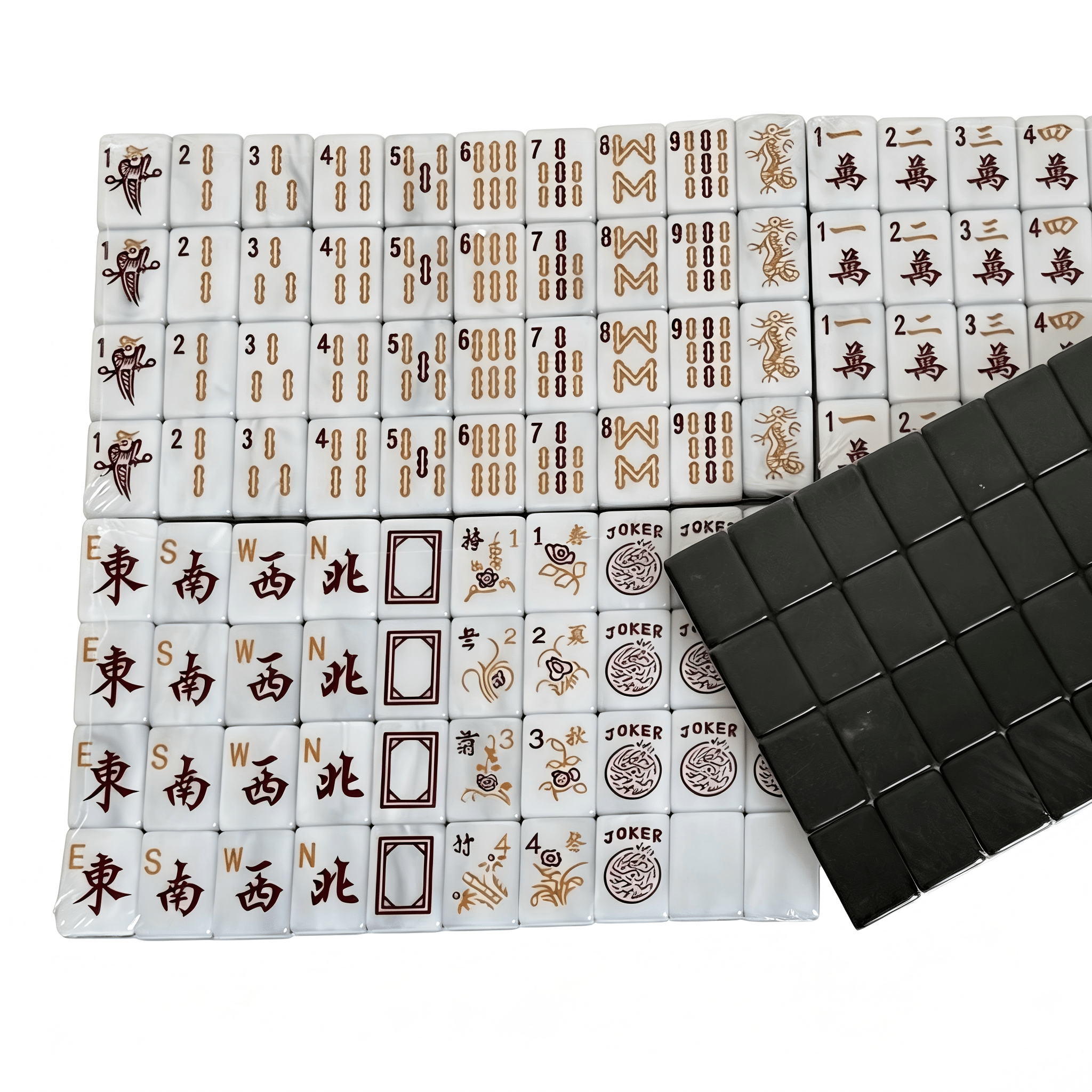
This guide covers the whole system: what the numbers on the card mean, who pays whom, the doubles that multiply your win, how a real payout settles at the table — and the scoring mistakes that cost beginners the most. If you haven't learned the rules of play yet, start with our 15-minute beginner rules guide and come back.
What the Number on the Card Means
Every hand printed on the National Mah Jongg League card carries a point value, and the values follow a simple logic: the harder the hand, the higher the number.
- 25 points — the simplest, most common hands. Straightforward patterns, exposed play allowed.
- 30–40 points — moderate hands, often requiring two or three suits.
- 50 points — difficult hands, frequently concealed.
- 60–75 points — the toughest patterns, including most Singles and Pairs hands.
Higher numbers are tempting, but they're much harder to complete. The smart beginner play is to chase a 25 or 30 that your tiles already support — win rate beats hand value. Three small wins out-earn one big hand that never quite arrives.
One nuance worth knowing early: some hands on the card print two values — a lower and a higher one. The higher value pays for the harder version of the hand (commonly the version played without jokers, or fully concealed — the card's legend tells you which). And if you're still learning to navigate the card itself, our how to read the mahjong card guide breaks down every section.
Who Pays, and How Much
When you declare Mah Jongg, all three opponents pay you — but how much each one pays depends on how you won. This is the heart of American scoring:
- Won off a discard: the player who threw your winning tile pays double the card value. The other two players each pay the face value (single).
- Won by self-pick (drawing your winning tile off the wall): all three opponents pay double.
This one rule quietly shapes the whole game. Self-picking pays 50% more than winning the same hand off a discard — which is why experienced players sometimes decline a winning discard early in a hand, holding out for the bigger self-drawn payout.
The Jokerless Double
Most tables play one more multiplier: a hand completed without any jokers pays double. It stacks with the self-pick double too — a hand won from the wall with no jokers can pay up to 4× the printed value per player. Joker-free hands are rare and hard, which is exactly why they're rewarded.
Managing jokers is its own skill — when to spend them, when to hold them, and when passing them in the Charleston. Our joker strategy guide covers the full playbook.
A Worked Example
Say you complete a hand the card values at 30 points:
- Off a discard, with a joker: the discarder pays 60, the other two pay 30 each — you collect 120.
- Self-picked, with a joker: all three pay 60 — you collect 180.
- Self-picked, no jokers: the jokerless double makes it 120 per player — you collect 360.
Settlement happens with the chips or coins that come with most sets — count out the values and pass them over. No table-wide arithmetic, no rounding charts. That's the entire system.

When Nobody Pays (and When You Pay)
Three situations every scorer should know:
- Wall game: the tiles run out with no winner. Nobody pays — the hand resets and you re-deal.
- A wrong "Mah Jongg" call: if your completed hand doesn't actually match a line on the card, your hand is dead and you're out for the rest of that hand — and depending on house rules, you may owe a penalty to the table. It's the most expensive mistake in the game, which is why veterans verify their hand against the card before saying the word.
- House rules: clubs and home tables layer on their own conventions — penalty pools, jokerless doubles, payments to a "kitty." Always ask before the first hand, and keep a printed rule card on the table to settle disputes fast.
Put Scoring to Work
Once you understand payouts, your game sharpens. You stop chasing pretty 50-point hands you'll never finish and start asking better questions: Which 25 does my deal actually support? Is this discard worth taking, or should I wait for the wall? Is my opponent's exposure a joker hand I can safely feed — or a trap?
The fastest way to make scoring second nature is reps. Our free online American mahjong game plays complete NMJL games against AI opponents — hands, exposures, wall draws and all — so the payout logic becomes automatic before you play for real stakes. For more tactics once scoring clicks, see our tips to win more.
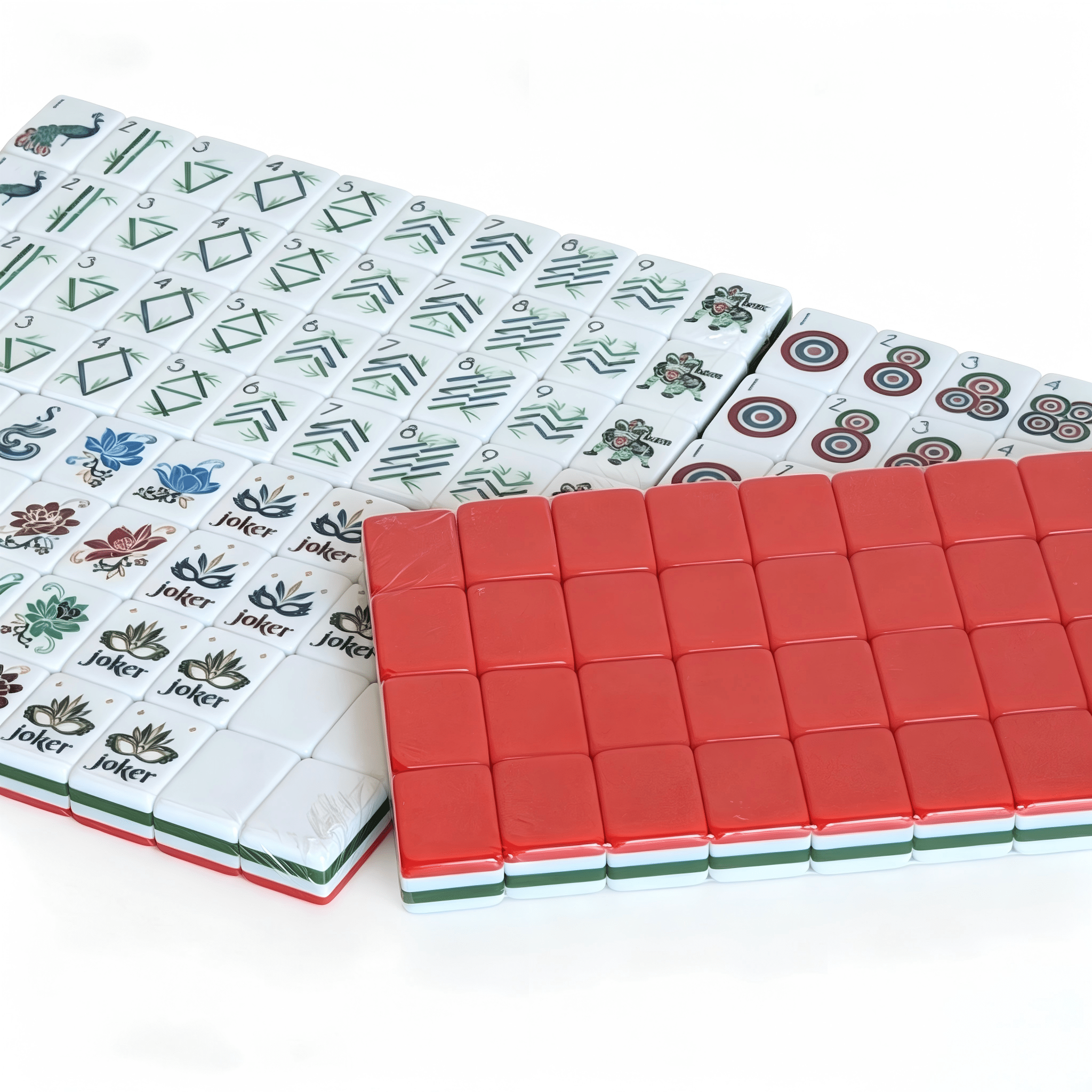
And if your regular table still argues about payouts mid-hand: a current-year 2026 NMJL rule card on the table ends 90% of scoring debates before they start.
American Mahjong Scoring FAQ
How does scoring work in American mahjong?
Every hand on the NMJL card has a printed point value, usually 25 to 75. When you win, all three opponents pay you that value — doubled if they discarded your winning tile (that player only), or doubled by everyone if you self-picked the tile from the wall.
What is the jokerless double?
Most tables double the hand's value when you win without using any jokers. Combined with a self-picked win, doubles stack — a jokerless wall win can pay 4× the printed value from each player.
What happens if you call Mah Jongg incorrectly?
Your hand is declared dead and you're out for the rest of that hand. Many tables also require a penalty payment. Always verify your hand matches a line on the card before declaring.
Do you pay anything if the wall runs out with no winner?
No. A wall game means no payments — the hand is over and the tiles are re-dealt. Some house rules keep a small penalty pool for dead hands, so confirm before play.
