
Thanksgiving Weekend Mahjong: A Four-Day Family Game Plan
Four Days. One Table. Zero Mall Trips.
Thanksgiving 2026 lands on Thursday, November 26 — and for once, the calendar hands you a gift: most families are together from Thursday straight through Sunday, with nothing on the schedule but turkey, leftovers, and football nobody's really watching.
That's a four-day window, and the families who have the best weekends are increasingly the ones who plan a Thanksgiving mahjong table into it. Mahjong is the rare game that works for exactly this gathering: it takes four players (your table fills itself), hands last about fifteen minutes (easy to join or leave), and it crosses generations better than any board game on the shelf. Grandma has played for forty years. The teenagers can learn in an afternoon. The uncles who "don't play games" will be leaning over someone's rack by Friday.
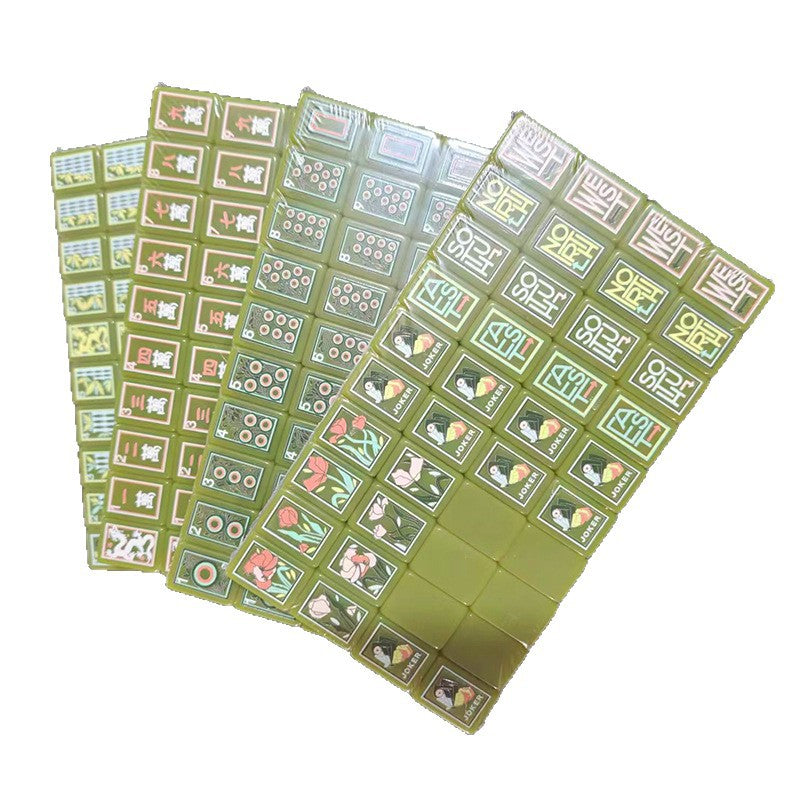
This is your complete Thanksgiving weekend game plan — what to set up, when to play, how to teach the newbies, and how to keep the whole crew at the table instead of scattered across the house. For the broader autumn hosting picture (menus, guest lists, table styling), pair it with our fall mahjong hosting guide.
Thursday Night: The Casual Opener
Nobody learns a new game at 8 p.m. after a 3,000-calorie dinner. Thursday night is not for teaching — it's for letting people watch. Set the table before dinner, deal one casual hand with your regular players after dessert, and let the newcomers see the tiles move. By the second hand, someone will ask what a joker does. That question is the whole lesson plan for Friday.
Two small Thursday moves pay off all weekend:
- Leave the set out overnight. A table with a proper mahjong mat and racked tiles is an open invitation — people drift toward it on their own Friday morning.
- Print a rule card. One current-year rule card on the table answers 90% of beginner questions without anyone having to play referee.
Friday: Skip the Mall, Teach the Game
Black Friday is the single best mahjong-teaching day of the year — everyone's home, nobody wants to leave the house, and the alternative is scrolling deal alerts on the couch. Run a beginner table Friday afternoon:
- Start with our 15-minute rules guide — send the beginner rules article to their phones over breakfast and half the teaching is done before they sit down.
- Play open-handed for the first three games. Racks face outward, everyone talks through their choices. It feels silly for twenty minutes and produces competent players by dinner.
- Keep a joker on the table as a physical teaching aid. Most beginner confusion is about jokers and the Charleston — cover those two things and everything else follows.
While the adults learn, park the kids and teens with something they'll actually choose: our free online mahjong games. The Mahjong Solitaire tile-matching game teaches the tile faces painlessly, and Mahjong Memory is a legitimate toddler-to-grandparent activity. When they show up at the real table later already recognizing the dots and dragons, Friday's work is done.
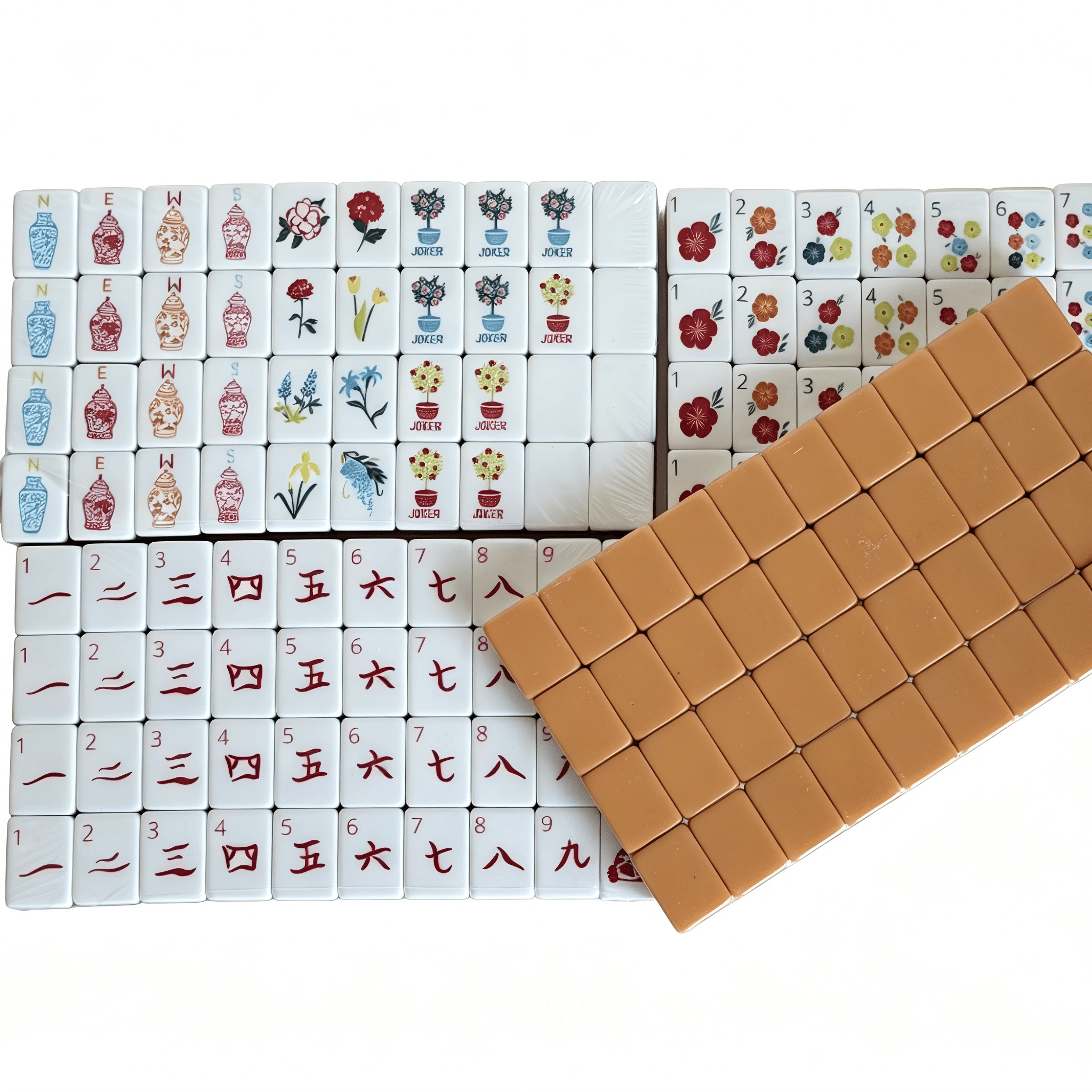
Saturday: The Main Event
Saturday is your tournament energy day — the full family table, real stakes, snacks within reach:
- Play for pennies or candy. Token stakes make hands matter without making anyone uncomfortable. Loser of each hand restocks the dessert plates.
- Rotate players every two hands so everyone at the house cycles through, spectators included. Rotation is what turns a four-person game into a whole-family event.
- Declare a "no phones at the table" rule for hands only — not the whole day. It holds because it's small, and it's the reason people actually stay present.
If your Saturday crowd is more mixed — a mahjong table plus a football crowd in the next room — that's the classic American double-header. Our take on football Sundays and the mahjong table applies to Saturday too: the game fills every commercial break and halftime, and nobody misses a snap.
Sunday: Leftovers, Low Stakes, Goodbyes
Sunday should require nothing of anyone. One relaxed table going all afternoon, drop-in and drop-out, winner of each hand gets the last slice of pie. This is the day mahjong quietly becomes a tradition rather than an event — the thing the family assumes will happen again at Christmas.
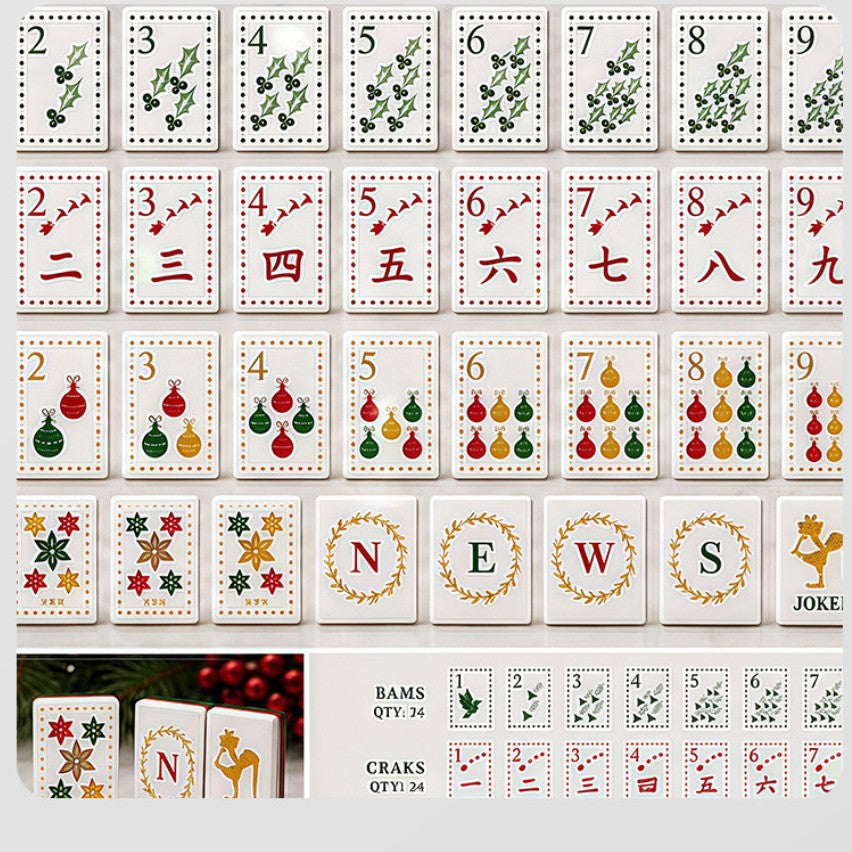
And speaking of Christmas: if the weekend sold someone in the family on the game, that's your cue. A Evergreen Noel holiday set under the tree in December turns one weekend's fun into a year-round habit — our mahjong gift guide matches sets to every personality at your table.
One Weekend, One Tradition
The difference between a family that plays mahjong and one that doesn't is almost always a single good weekend — someone set the table, someone taught, and by Sunday nobody wanted to stop. Thanksgiving 2026 gives you four days. Use two of them for this, and by next year you won't be planning it. You'll just be setting the table.
New to hosting altogether? Our first mahjong night checklist covers setup, snacks, and seating — everything except the turkey.
Thanksgiving Mahjong FAQ
How do you play mahjong at Thanksgiving with mixed skill levels?
Run a beginner table with open racks for the first few games, then rotate experienced players in as "table coaches" one per seat. Hands last about fifteen minutes, so rotation keeps everyone engaged without anyone being stuck in a long teaching session.
Can kids play American mahjong?
Kids around 8 and up can absolutely learn, especially with a joker-heavy approach. Younger children do better with tile-based games first — free online options like Mahjong Solitaire and Mahjong Memory teach tile recognition while being genuinely fun.
What stakes should a family Thanksgiving game use?
Keep it token — pennies, candy, or silly forfeits like refilling snack plates. The goal is engagement, not winnings. Small stakes make every hand matter without creating holiday-table tension.
When should I buy a mahjong set before the holidays?
Buy by early November. Holiday-themed sets sell out fastest, and shipping windows tighten from Black Friday onward. If you're gifting, order before December 10 to be safe.
